The Roman Catholic Church is the largest and one of the oldest branches of Christianity, which has contributed significantly to the world’s history and Christianity.
Possessing more than one billion members worldwide, the Catholic Church is much more than a religious organisation.
It is a cultural, social, and even political phenomenon. It has touched societies from the earliest to the recent civilisations, including the Roman Empire and societies in the present-day continents of America, Europe, Asia, Africa and the rest of the world.
This extensive piece provides the reader with a basic understanding of the history of the Catholic Chur, starting from infancy to when it became what it is today, the religious beliefs of this church, and the impact it has had on other Christian faiths.
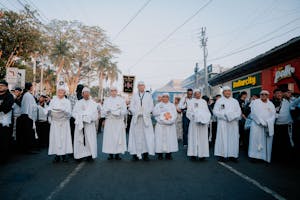
In addition, it explores the specific form of worship that permeates Catholicism, namely its extraordinary liturgical and sacramental character, and sections of the global map that are home to the Catholic Church.
Therefore, a study of the Catholic Church’s formation and developmental history is useful for defining the theme of the history of Christianity.
The roots of the Catholic Church as an institution are also rooted in the man Jesus Christ and His twelve apostles, one of whom was St.
Peter is counted as the first pope according to the Catholic belief system. For centuries, the Catholic Church has gone through various types of changes.
It experienced crises such as persecution, doctrinal controversies, and the Reformation, which shaped it today.
Not only has this historical journey outlined Catholicism, but it has also played a role in the emergence and development of the other Christian denominations.
The Origin of the Catholic Church
Historical Background
The Catholic Church has its basic foundation rooted in Jesus Christ and his apostles. It is viewed by the Catholic Church that Jesus chose Peter to be the head of the apostles, meaning that the first pope was established by Christ.
This can be supported by the scriptures that limit Jesus Christ’s own word, Matthew 16:18-19, where Jesus said to Peter.
“You are Peter, and on this rock I will build my Church, and the gates of Hades shall not prevail against it.
I will give unto thee the keys of the kingdom of heaven: and whatsoever thou shalt bind on earth shall be bound in heaven, and whatsoever thou shalt loose on earth shall be loosed in heaven..
The resurrection and ascension
After the resurrection and ascension of Jesus, the apostles started preaching about him and his teachings, which in turn formed basic Christianity and churches all over the Roman Empire.
These early Christians had their persecution period, but churches did not diminish in size. Constantine issued the Edict of Milan in 313 AD, which made Christianity legal, and from this time, it expanded openly.
Development anFormalisationon
As Christianity evolved, through these thousands of years, the establishment of the church, as well as its teachings, grew rigid.
The First Council in council was convoked by Constantine in 325 AD at Nicaea, and it tackled several heresies as well as formulated the present orthodox creed, the Nicene Creed, which is chanted in Catholic services.
The subsequent councils once again elaborated the doctrines and discipline of the Roman Catholic Church.
Originally, the appellation “Catholic” in the sense of “universal” was given to the Church at the beginning of the second century by Ignatius of Antioch.
It focused on the unity of the Church and its worldwide structure under the leadership of the Bishop of Rome, which was later called the Pope.
Relevance to the Development of Other Churches
The Great Schism
Among the historical factors, the most impactful one is the Great Schism in 1054 that led to the division of Christianity into two different branches: Roman Catholics and Orthodox.
This division was mainly carried out on theological, political, and cultural grounds that had emerged from many years of differences.
This division resulted in the emergence of the Orthodox Church; it resembles Catholicism to a significant extent, although it has its peculiarities regarding practices and beliefs.
The Protestant Reformation
As for apparel in Christian denominations, one may, perhaps, mention the significant impact of the Catholic Church on the Protestant Reformation in the 16th century.
Papal Antichrist, Martin Luther, John Calvin, and Huldrych Zwingli started the Reformation mainly due to perceived corruption and doctrinal questions within the Catholic Church.
Luther’s reformation in 1517 with his 95 Theses was a direct attack on the sale of indulgences and going back to the scripture.
The Reformation brought about so many divisions of Protestantism, such as Lutherans, Calvinists and the Anglican or the Episcopalians.
All of these movements preserved several features traditional to Catholics while rejecting others, and this is one of the main reasons we can observe such a variety of Christian churches now.
Mode of Worship
Liturgy and Sacraments
Therefore, adoration or veneration in Catholic worship is highly liturgical, with the Holy Mass as the keystone act.
The Mass is divided into two main parts: two administering forms of the liturgy, which are the Liturgy of the Word and the Liturgy of the Eucharist.
The Liturgy of the Word entails the construction of lessons from the Old and New Testaments, a homily, and prayers of the faithful.
The Sacrament of the Eucharist includes the Holy Communion of the bread and wine, which is transformed into the flesh and blood of Jesus.
The Roman Catholics recognise the seven sacraments as being external ceremonies or symbolic signs of a spiritual reality that was established by Christ.
They include: Baptism, Confirmation, Holy Communion, Reconciliation, Anointing of the Sick, Holy Orders, Marriage and the last sacrament.
All the sacraments are very important in the life of a Catholic as they usher in different stages or milestones and involve commitments on the spiritual path of the believer.
Rituals and Devotions
There are also worship rituals and devotions performed in the Catholic Church. The Rosary is a form of prayer with the use of beads which focuses on the events of Christ’s life and the teachings of the Virgin Mary.
Other significant forms of devotion are the Stations of the Cross, depicting Jesus’ journey to the cross, and Eucharistic Adoratio, where the site of the consecrated host is exposed for the glory of G, od and spending time in prayer and worship.
Liturgical Calendar
Advent is among the most significant seasons recognised by the Catholic Church and is always followed by the Christmas season.
There are Advent – preparation for Christmas, Lent – preparation for Easter, and most of the other days that are not in Christmas and Easter are known as Ordinary Time.
The central ones are Christmas, which marks the birth of Jesus, Easter, which is associated with His resurrection and Penteco, which is regarded as the descent of the Holy Spirit on the apostles.
Geographic Distribution and Presence
Global Presence
The Catholic church is the largest Christian variant seen globally, with a presence in all but a few countries.
Another evidence seen is the expansion of this religion across the globe, which is attributed to historical evangelism and the incoming of different cultures. Countries and areas of the world with a larger representation of Catholics
Europe
Europe predominantly follows Christianity and was traditionally the epicentre for the Catholic population. Even today, several Countries in Europe, like Italy, Spain, France, Poland, and Ireland, have a large Catholic population.
The Vatican City is part of Rome and an independent city-state as well wh which is the seat of the Roman Catholic Church and home to the pope.
Latin AmericaThe
Catholic Church is very influential in Latin America, with countries like Brazil, Mexico, Colombia, and Argentina being dominated by Catholics.
This part encompasses one of the Fig Tree branches, which is one of the most energetic and culturally charged areas for the Church.
North America
Both the USA and Canada have a large representation of Catholic people, especially in almost all residential areas that have immigrants from European and Latin countries.
The Catholic Church is one of the main religious organisations that affects different spheres of social and political reality.
Africa
Catholicism is rapidly expanding, especially in the African continent, with several countries such as the Democratic Republic of Congo, Nigeria, Uganda, and Kenya marked as having increased rates of Catholics. It is involved considerably in education, health and social services in many parts of the continent.
Asia
Even though the proportion of Catholics is not as high as in other parts of the world still there are countries like the Philippines and East Timor where a good number of people are Catholics.
The Church is also present in such countries as India, South Korea, and China; however, in many cases, the Church works under difficult conditions.
Conclusion
The Roman Catholic Church wh which has been around for centuries and whose impact cannot be underestimated, forms the central part of Christianity.
Starting from the apostles and Jesus up to the contributions towards the formation of other churches, the impact of the Church is seen.
With its setup of mass, sacraments, and various devotions, it offers real spiritual content and meaning to the lives of millions of Catholics.
The large catholic territory in the current society in Europe, Latin America, North America, a Afri, and parts of Asia justify this religion as relevant in the current society.
In the end, the Catholic Church assimilates the complexities of global conformity in the present-day world.
It continues to be an essential foundation in religious, social and cultural contexts in the global community. You can read more related posts on our church ministry page on the site.